
 News
News
DIGHT-Net Workshop Report: “Practices and Structures: How to Build an Academic Hub that Embraces Diversity?”
September 15, 2026
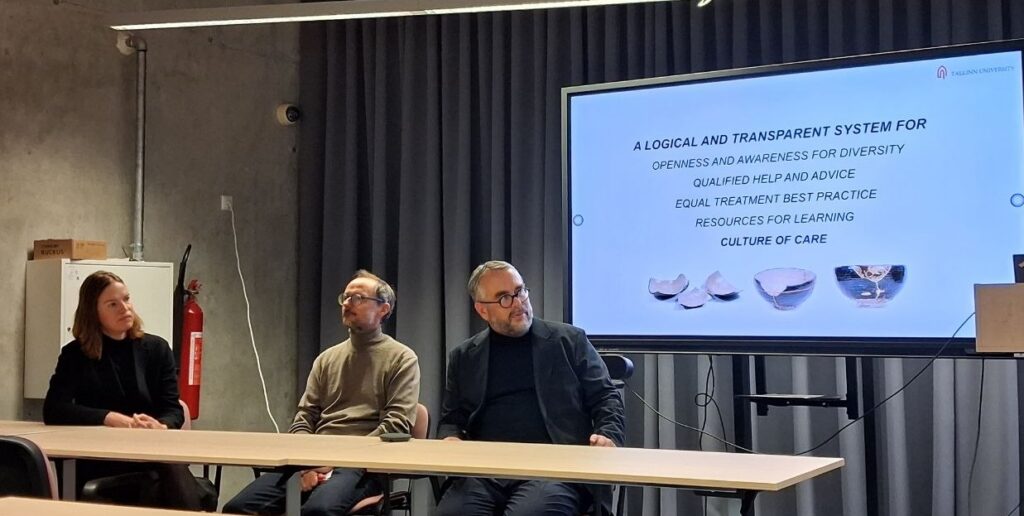
On 9 September 2026, Tallinn University hosted the DIGHT-Net workshop “Practices and Structures: How to Build an Academic Hub that Embraces Diversity?” The workshop focused on the challenges and opportunities involved in creating diverse, inclusive and sustainable academic structures, with particular attention to the future development of the Digital Cultural Heritage Research Hub (DIGHT-Hub). The workshop was organised by Prof. Hannu Salmi, Heidi Hakkarainen and Petri Paju from the University of Turku, together with Merit Maran from Tallinn University.
Prof. Hannu Salmi (University of Turku) opened the workshop by introducing the programme and mapping out the main questions guiding the day. Prof. Marek Tamm (Tallinn University) continued with an introduction to DIGHT-Hub and reflected on what kind of structure and platform it might become after the conclusion of the DIGHT-Net project. He proposed thinking about the Hub as a “thin institution, thick network”: rather than building a centralised institution that would generate additional layers of bureaucracy and administration, the emphasis should be placed on connections, dialogue and exchange. In this vision, the Hub could function as a space of translation between disciplines, institutions and different forms of expertise, while also challenging disciplinary boundaries.
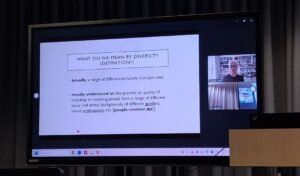 The first lecture, “The Diversity Conundrum: Between Desire and Constraints,” was delivered by Prof. Gabriele Griffin (Uppsala University). Drawing on her extensive experience with academic centres and research networks, Griffin examined the many forms that diversity can take and the institutional conditions that either support or restrict it. Her examples included the Centre for Gender Research and the Centre for Digital Humanities and Social Sciences at Uppsala University, as well as several interdisciplinary research networks and research schools. Griffin argued that building diversity requires more than recruiting a diverse group of people: it also involves considering diversity in research topics, methods, materials, curricula, administrative processes and working environments.
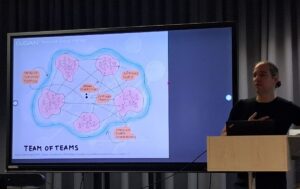 Prof. Maximilian Schich (Tallinn University) followed with the presentation “Building a Thriving and Diverse Research Group,” drawing on his experience of developing the CUDAN research group at Tallinn University. His talk approached diversity through the practical organisation of multidisciplinary research and examined how researchers with different disciplinary backgrounds, methods and forms of expertise can work productively together while maintaining both freedom and scholarly rigour.
The afternoon panel discussion, “Towards Inclusive and Thriving DIGHT-Hub: Problems and Solutions for the Bottlenecks of Academic Diversity,” began with an introduction by Marge Tooming, Commissioner for Equal Treatment at Tallinn University. Tooming presented Tallinn University’s current work on equal treatment, including the development of an equal treatment framework, management training, guidelines for handling appeals and the introduction of restorative practices.
The panel brought together Prof. Daniele Monticelli, Prof. Marek Tamm and Marge Tooming and was chaired by Prof. Hannu Salmi. The participants shared personal experiences of building networks and collaborating across disciplinary, institutional and cultural boundaries. The discussion approached diversity from several interconnected angles, including cultural and gender diversity, disciplinary diversity and epistemological diversity. Particular attention was paid to the question of how academic environments can make meaningful room for difference while at the same time creating enough shared ground for collaboration.
Across the workshop, the discussions highlighted the importance of creating structures that enable encounters across boundaries, while remaining attentive to the practical conditions that determine who can participate and whose forms of knowledge are recognised.