News
News
DIGHT-Net Seminar Report: “Personal Archives: From Personal Collections to Digital Archives”
June 10, 2026
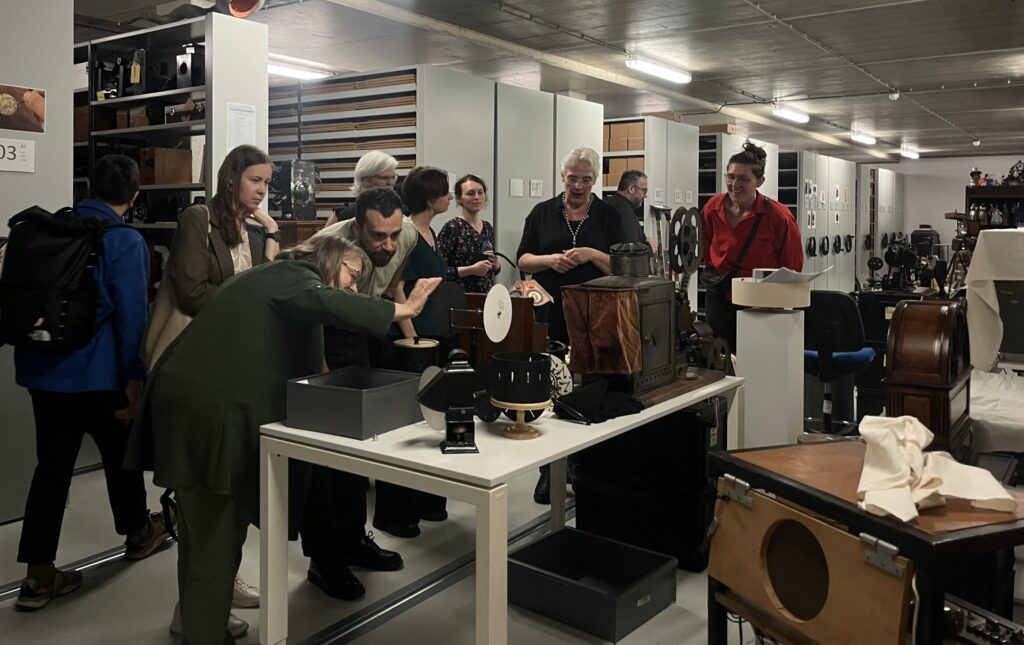
On 4 and 5 of June, the University of Amsterdam hosted a DIGHT-Net Seminar titled “Personal Archives: From Personal Collections to Digital Archives.” The seminar brought together project members from the University of Bologna and Tallinn University. The two-day event combined various site visits and presentations on archives, including personal collections, institutional archives, and digital archives. The seminar aimed to examine how personal and institutional collections and heritage practices are dealt with in the Netherlands. This focus highlighted the importance of viewing archives as commemorative spaces with their subjectivity and the power of historical mediation.
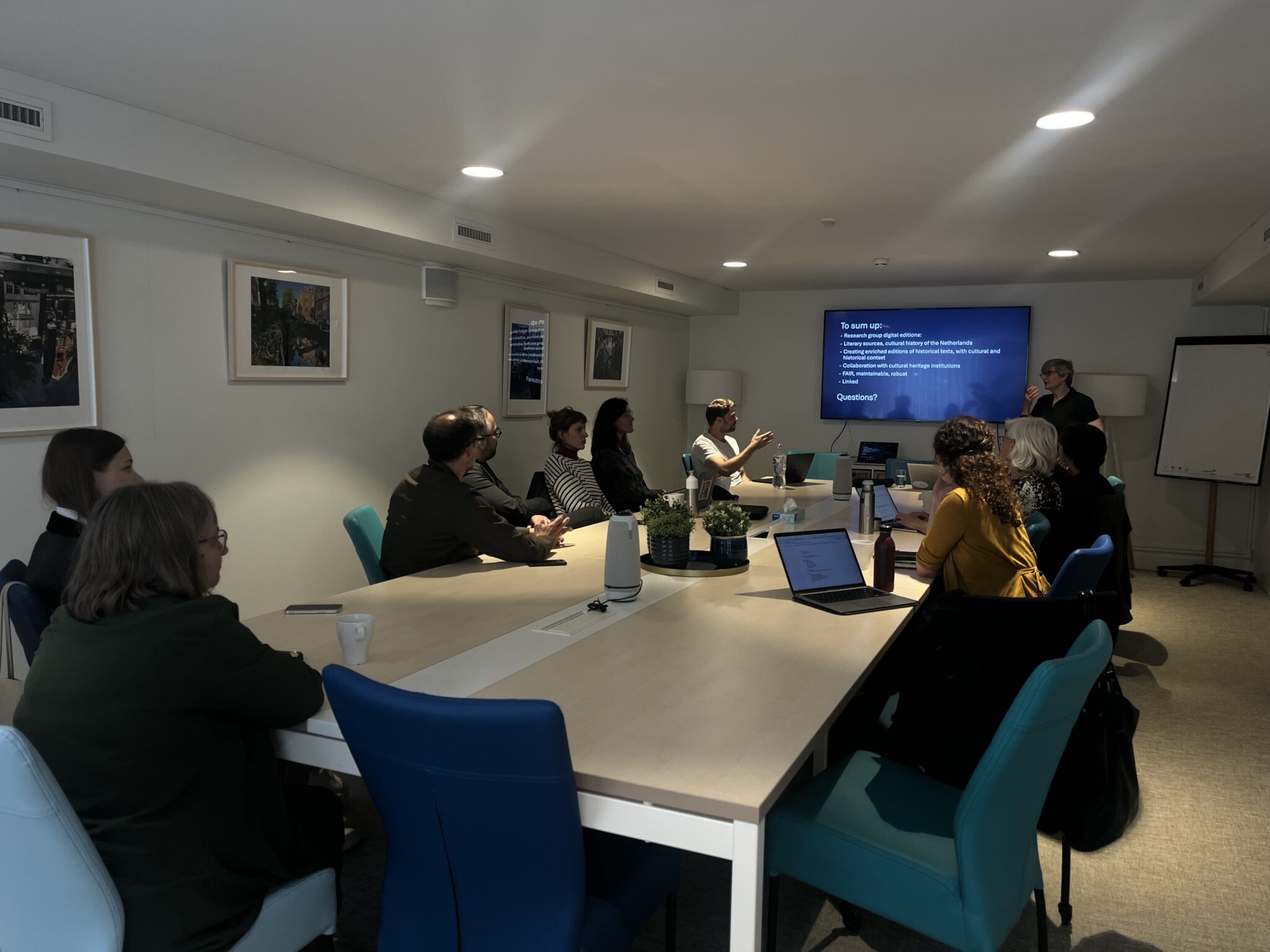
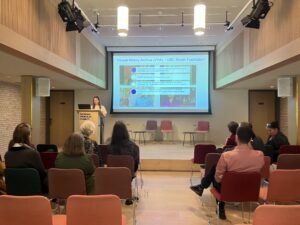 The first day began with a site visit to the Huygens Institute, where the research group, Innovating Knowledge, discussed their ongoing digitisation projects. They presented multiple initiatives focusing on digitising Dutch Archives and creating an infrastructure to manage the overwhelming collections in a usable way. Moreover, they introduced the TextAnnoViz method, which uses templates to analyse and compare texts, and is helpful for digitising artists’ letters and other sources.
The day continued with a group visit to the National Holocaust Museum, where the archiving practices and their use in the permanent exhibition were discussed. However, the visit primarily focused on the temporary Please Continue… Conversations with Holocaust Witnesses exhibition. An initiative allowing the visitors to engage in a literal dialogue with Holocaust survivors. The visit focused primarily on questions of ethical, considerate and respectful ways of handling difficult heritage archives.
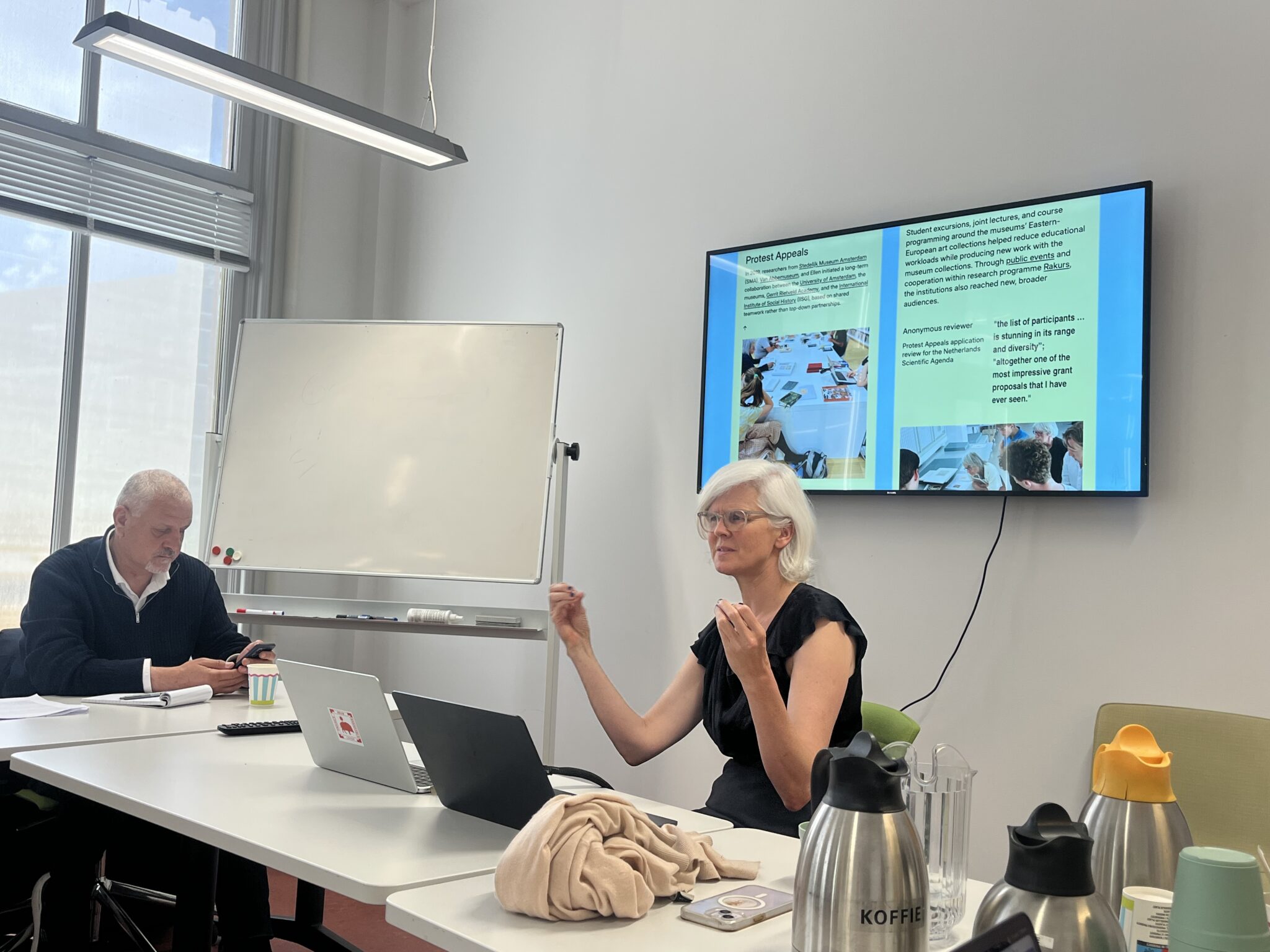
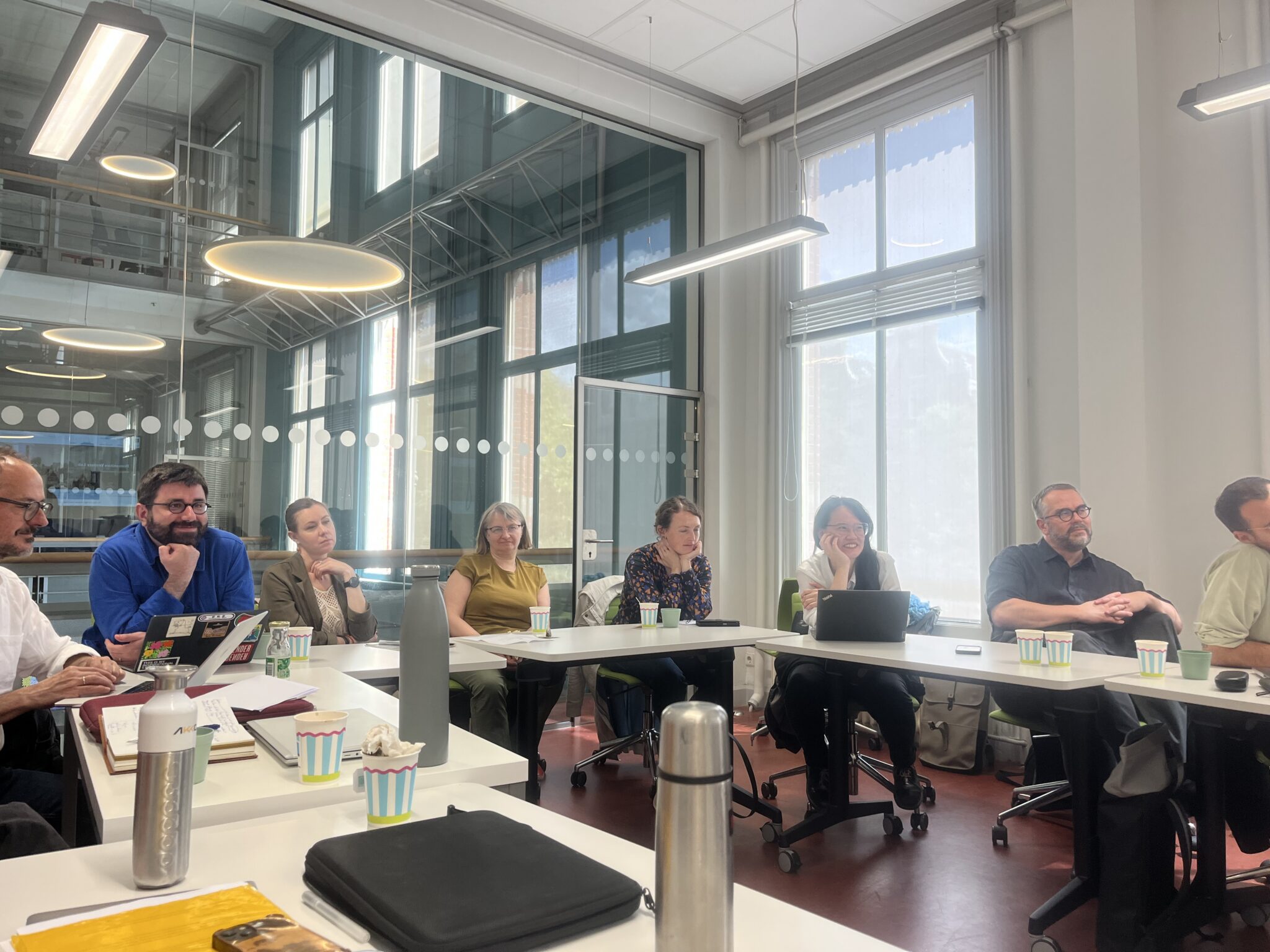
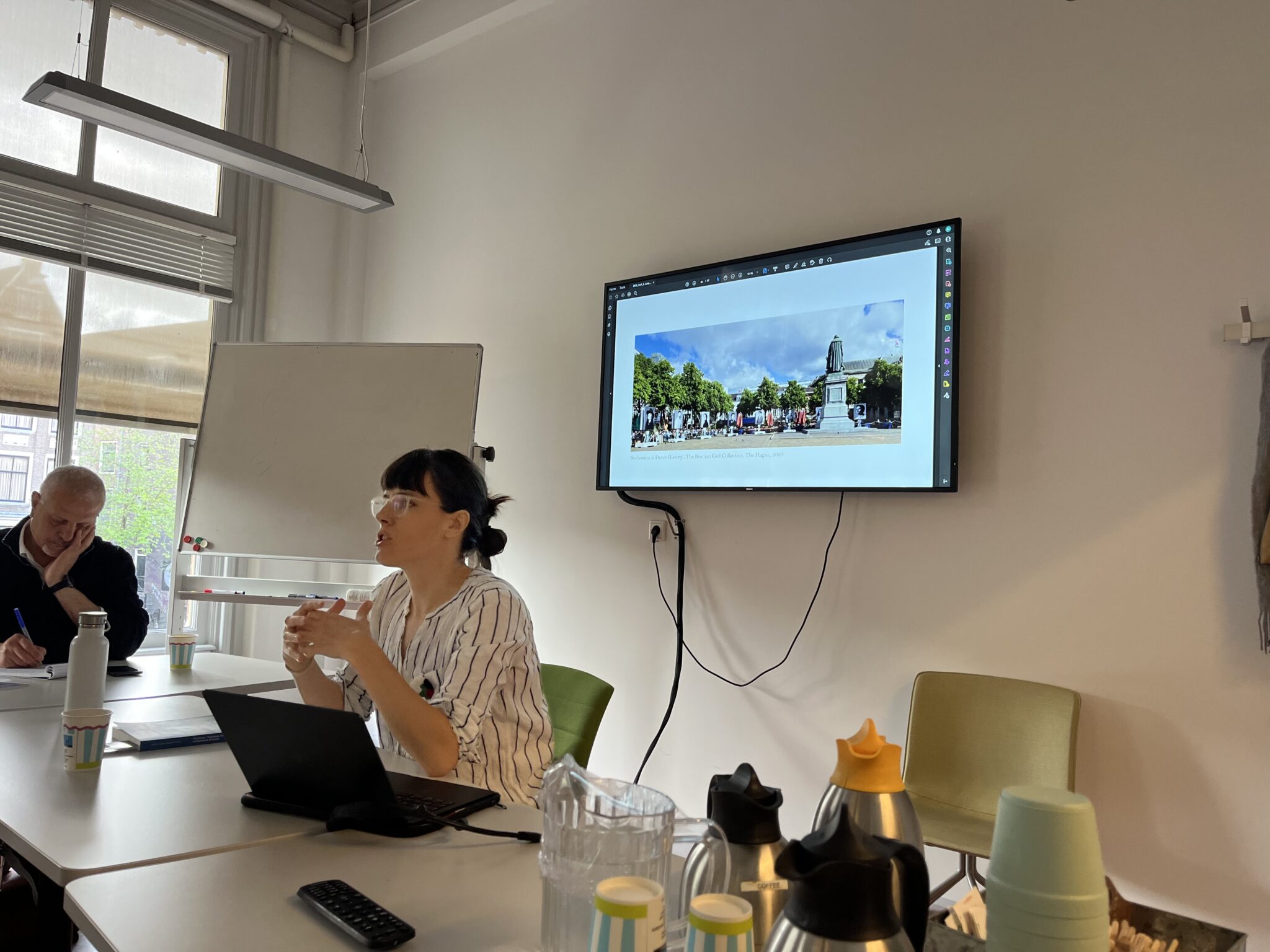
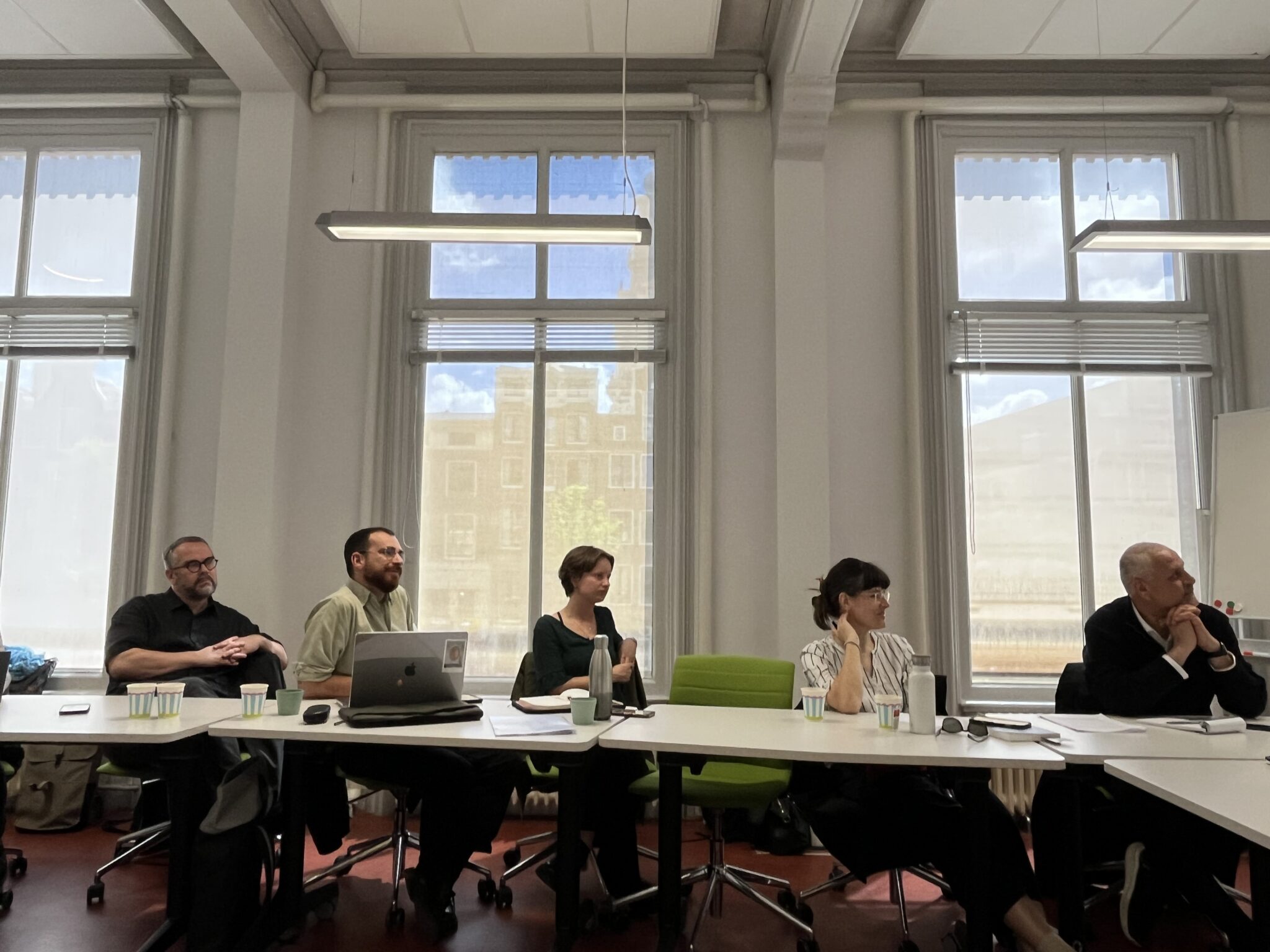
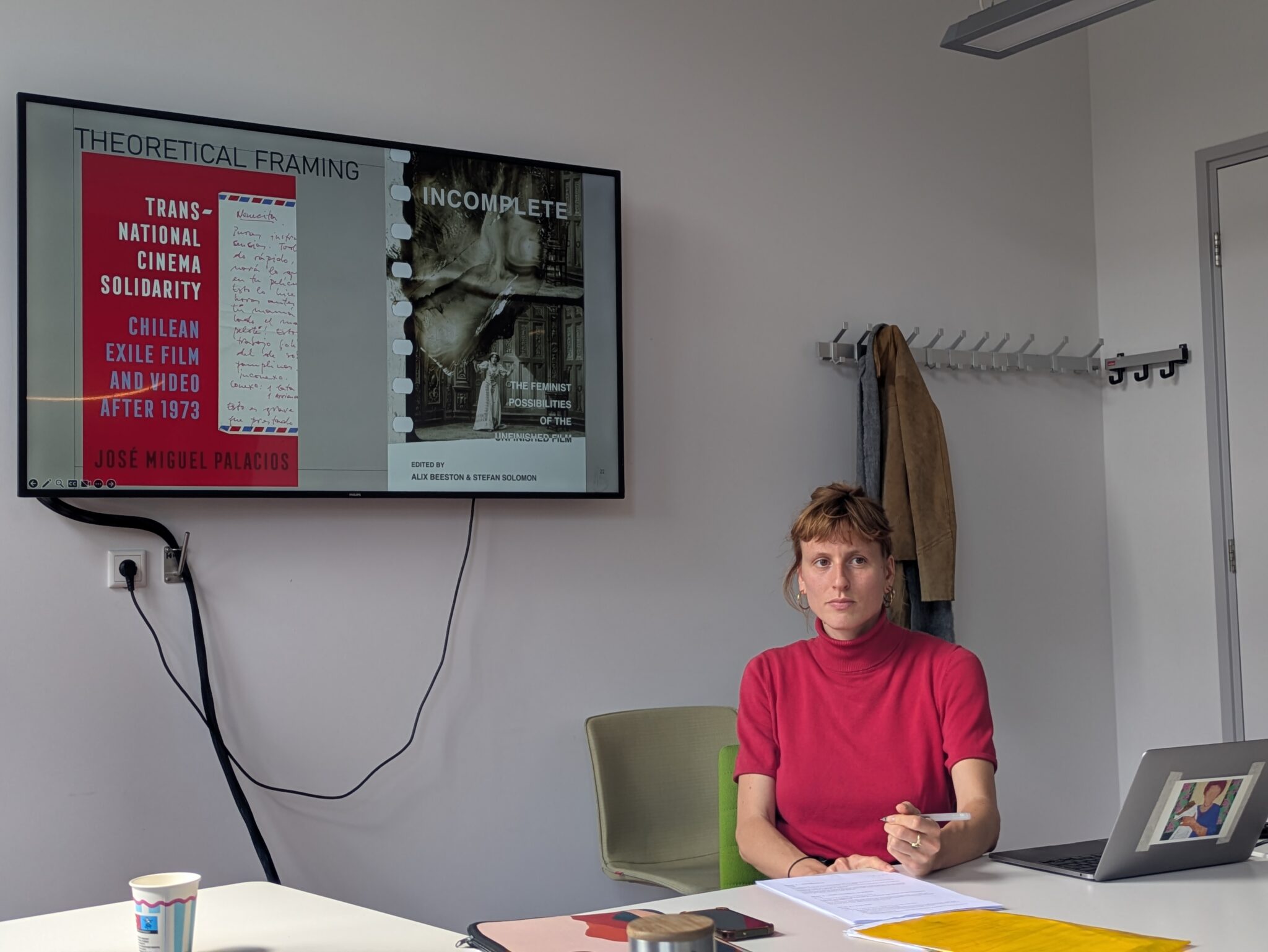
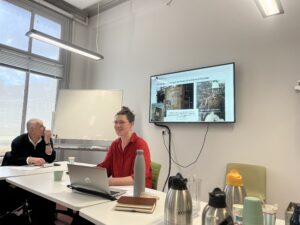 The second day of the seminar began with an introduction by Prof. Ihab Saloul (University of Amsterdam), who opened the presentation segment of the programme. Firstly, Sabina Tanović (Delft University of Technology) presented her research on memory mapping of the International Criminal Tribunal for the former Yugoslavia (ICTY) in The Hague. Through establishing the connections, challenges and institutional limitations, she argued for the multidimensionality of commemorative spaces and archives. Thereafter, Luna Hupperetz (University of Amsterdam) presented her research on the disclosure of militant audiovisual heritage. She focused on the reframing of histories using digital research environments. These tools enable the analysis and access to audiovisual heritage collections, as illustrated by the footage from the anti-colonial film Unknown Surinam. Leah Niederhausen (University of Humanistic Studies) discussed what realities are constituted by restitution processes. Engaging with the symbolic and personal dimension of archival restitution through her work with the collaborative Hoachanas Community Library and Archives. She argued that restitution of anti-colonial knowledge extends beyond the return of archival materials and should begin with the creation of a community-owned knowledge space. The presentation portion was concluded by Prof. Ellen Rutten (AMS: Academy-Museum Synergies), who introduced AMS, dedicated to fostering stronger collaboration between museums and academic institutions. Drawing on her academic expertise, she works to strengthen partnerships between universities and museums. She then discussed the ongoing Westerbork Project, which examines contested audiovisual materials and their use as propaganda tools.
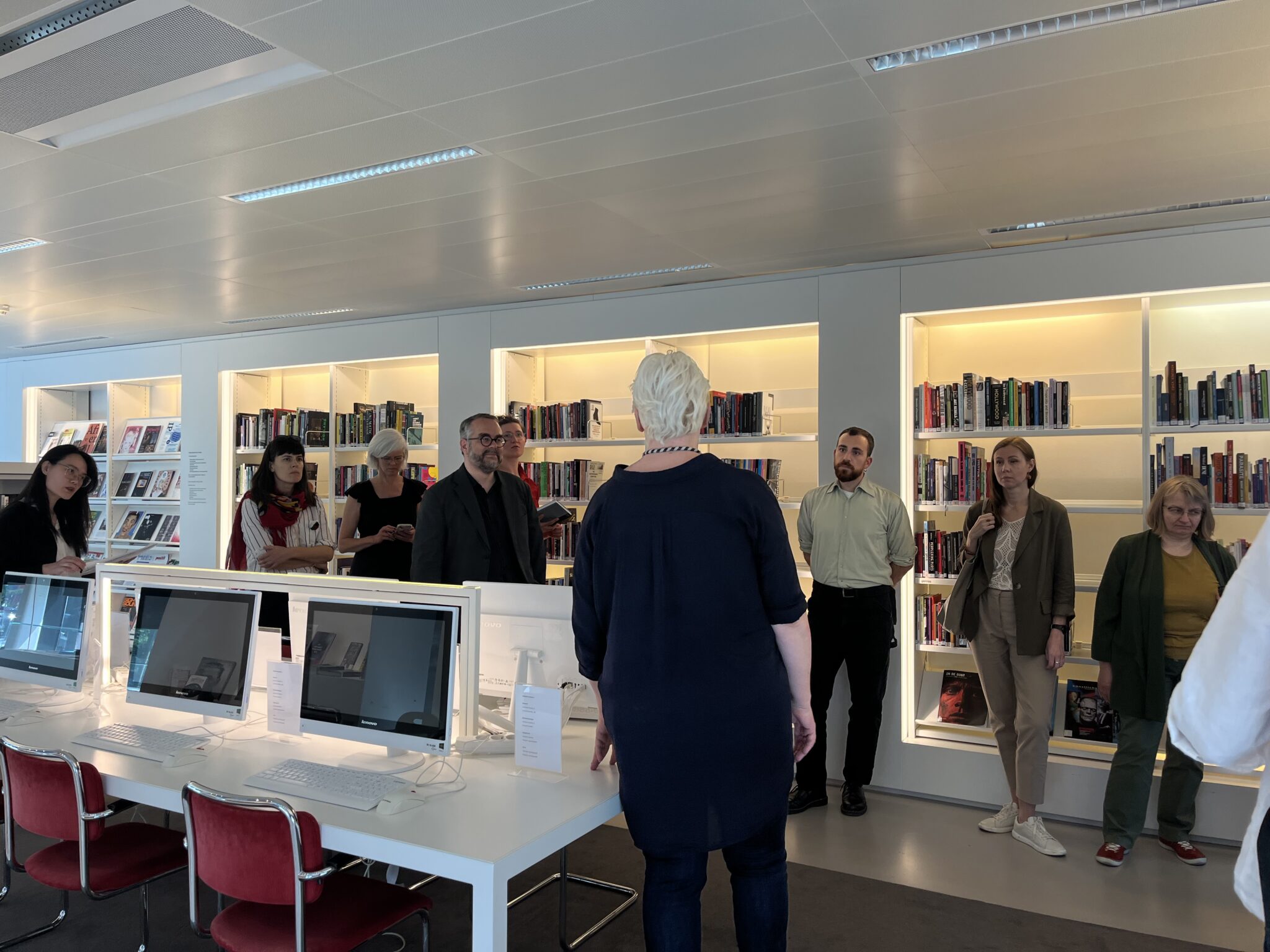
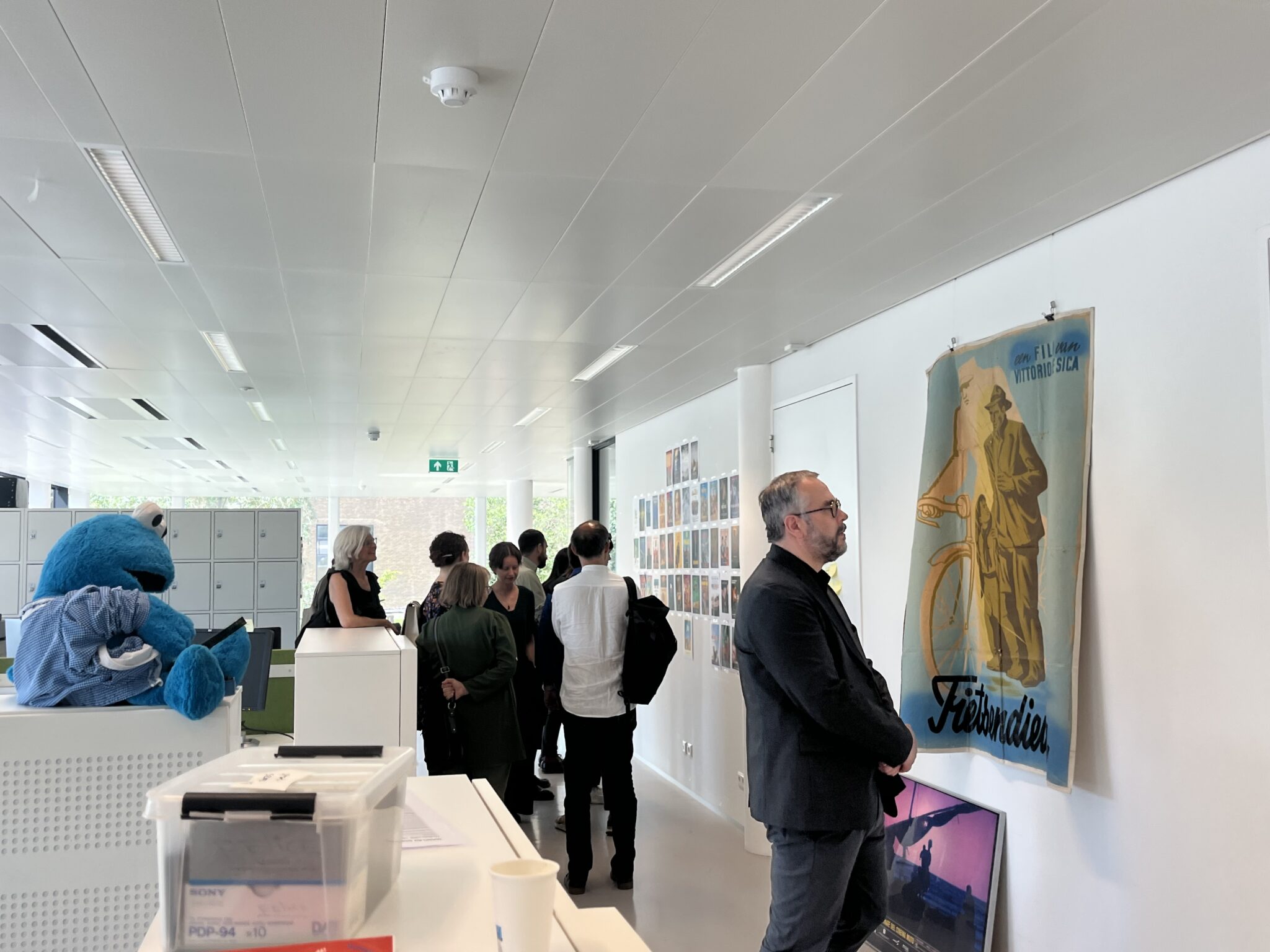
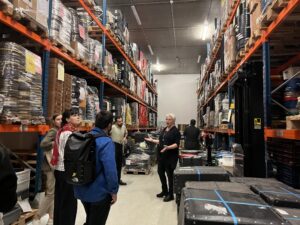 The seminar ended with a group visit to the Eye Filmmuseum Collection Centre. During the visit, participants toured the extensive collection of films and related objects, offering insight into the history and development of Dutch film culture. The group also learned about preservation practices and the challenges involved in managing and conserving diverse materials.
The two days, rich in presentations and site visits, combined theory with exploring local collections and archives. By foregrounding questions of digitisation, access, restitution, and ethical responsibility, the programme highlighted both the possibilities and challenges involved in working with personal and institutional archives.
Michalina Sławek