News
News
DIGHT-Net Seminar Report: “Digital Historicity: Reconfiguring Relations with the Past in the Digital Age”
December 10, 2025
Following the Hub launch, DIGHT-Net convened a one-day seminar on December 2, 2025, examining how digital technologies fundamentally reshape contemporary relationships with the past. The seminar brought together scholars from across Europe to theorize the digital tools and technologies that shape our historical thinking, and the challenges that arise when historicity is processed by the digital. The seminar was dedicated to the memory of Wulf Kansteiner (1964–2025), whose unexpected death prevented his participation.
Providing an opening framework for the seminar, Prof. Marek Tamm (Tallinn University) identified digital historicity’s key dimensions: our relationships with the past become fleeting, interactive, immersive and dynamic; the past is not only made present, but virtual; and history becomes a participatory enterprise. Shortly commenting on the manifold way wherein this historicity is expressed, including digital commemoration, Virtual Reality, and historical video games, Tamm argued how memory is being reshaped through the digital condition.
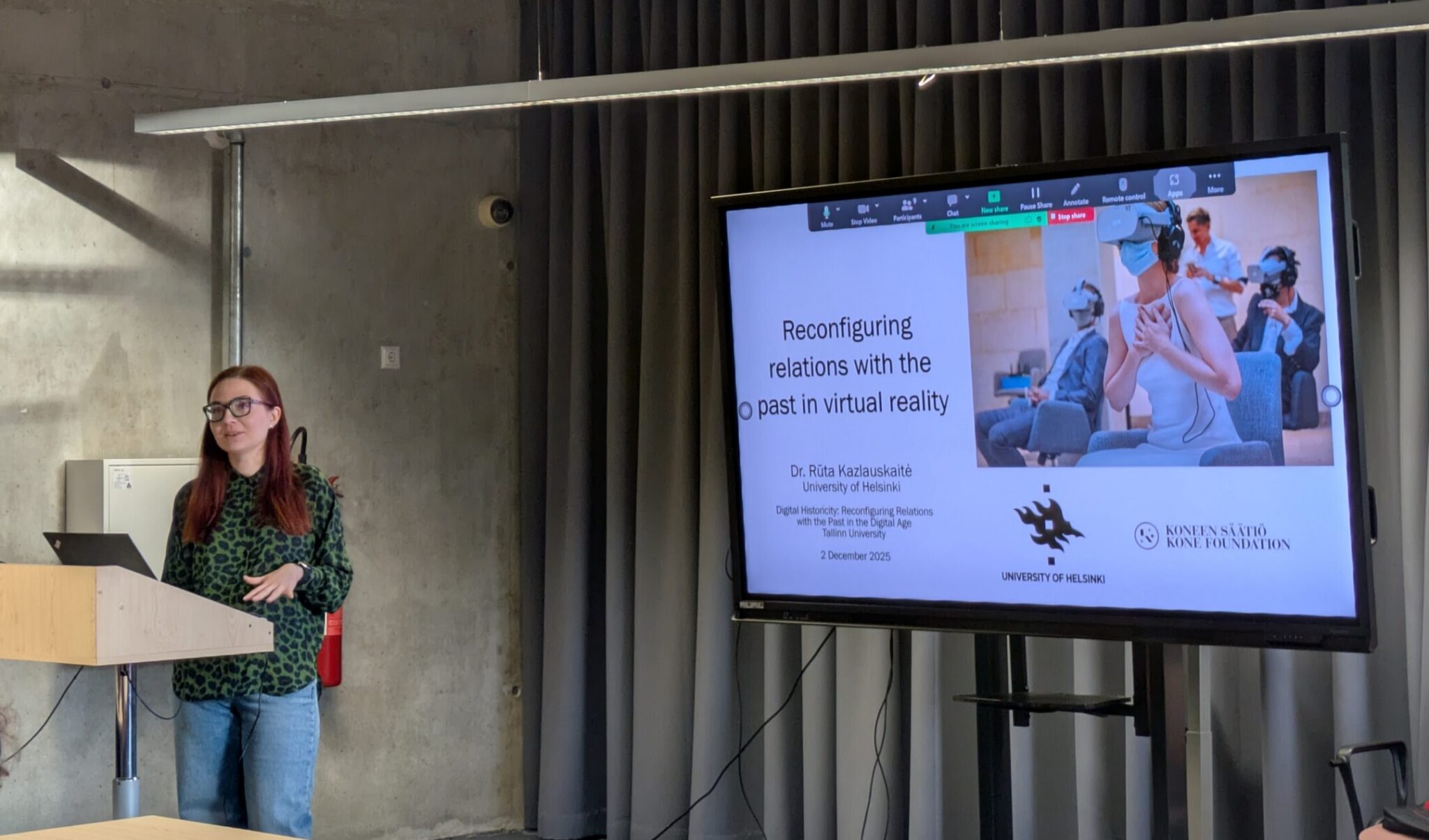
Next, Rūta Kazlauskaitė (University of Helsinki) examined VR’s transformation from storytelling to “storyliving,” analysing how immersive technologies function as emotion training devices in contexts ranging from Russian war propaganda to Polish patriotic education. Her research on the political uses of VR, and the strong impact these techniques can have on autobiographical memory, illustrated how affective technologies are used for the creation and strengthening of in-group belonging.
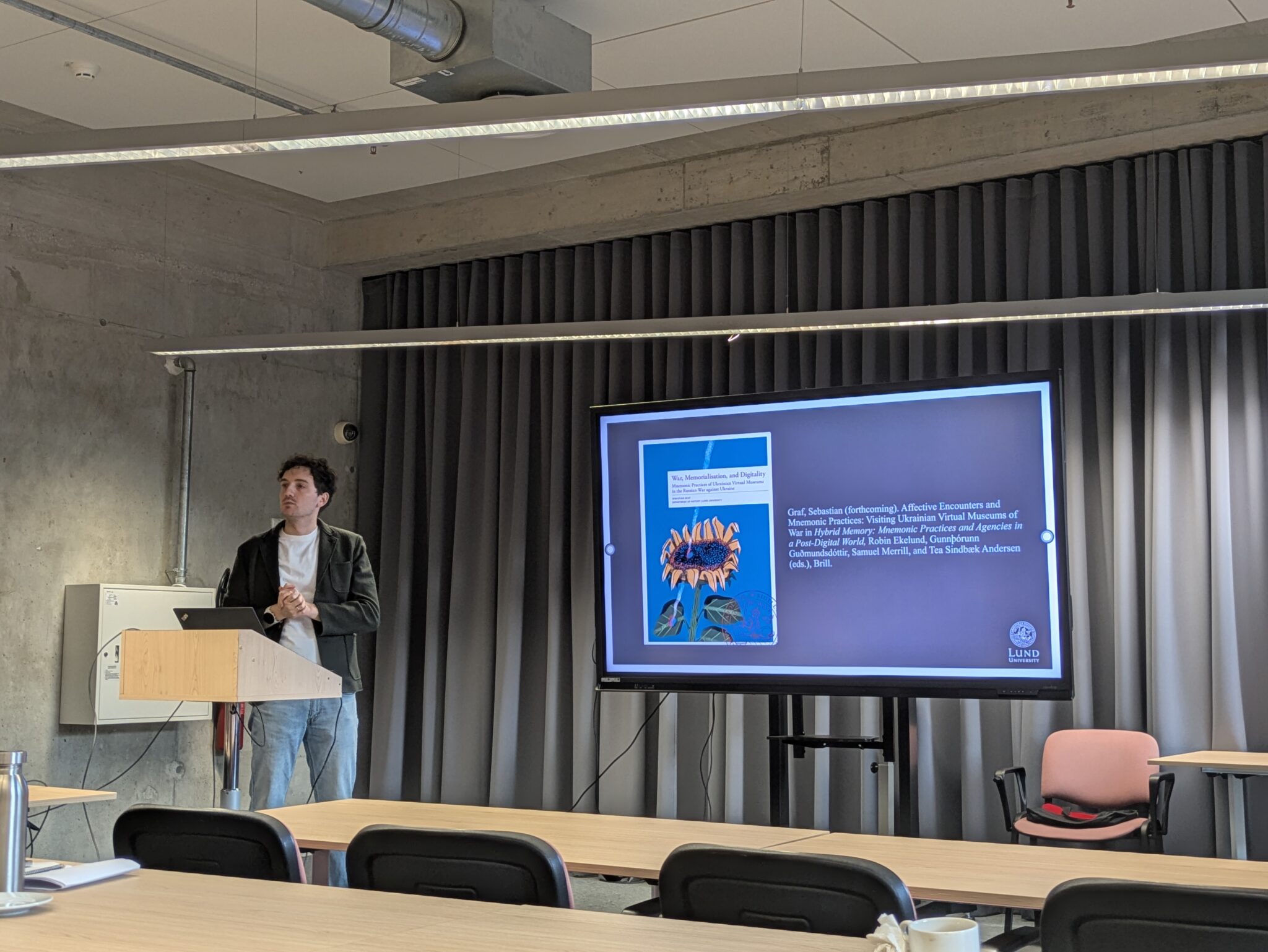
Sebastian Graf (Lund University) presented findings from his doctoral research on Ukrainian virtual war museums, introducing how the radical simultaneity of the museums’ presentist orientations and futurist perspectives inform their objectives of preserving the ongoing destruction due to Russia’s war of aggression. Through a media-go-along methodology with Ukrainian participants in Sweden, Graf demonstrated how virtual museums create affective encounters that are geared towards inciting care and the actualization of Ukrainian victims’ experiences.
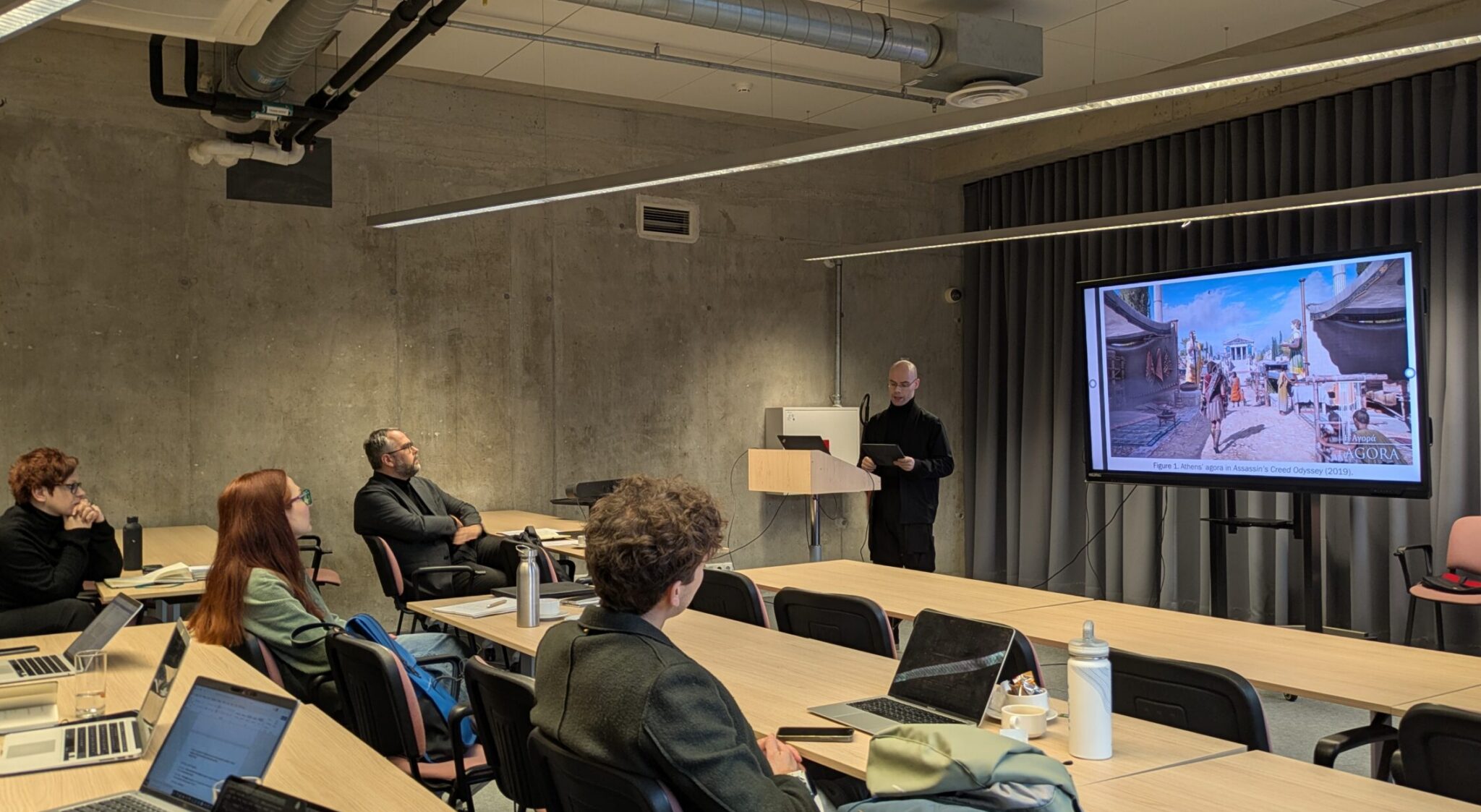
Thereafter, Oliver Laas (Tallinn University) and Marek Tamm co-presented on historical video games, arguing that these function as laboratories where societies negotiate relations to the past through interactivity, immersion, and procedurality. Games hence encode a model of the world and are far from neutral, and bring with them epistemic, affective, ethical and political implications. They identified how games spatialize time into navigable environments and encode normative theories of history, making players co-authors of conditional historical trajectories together with the scripts and procedural rhetorics of the game.
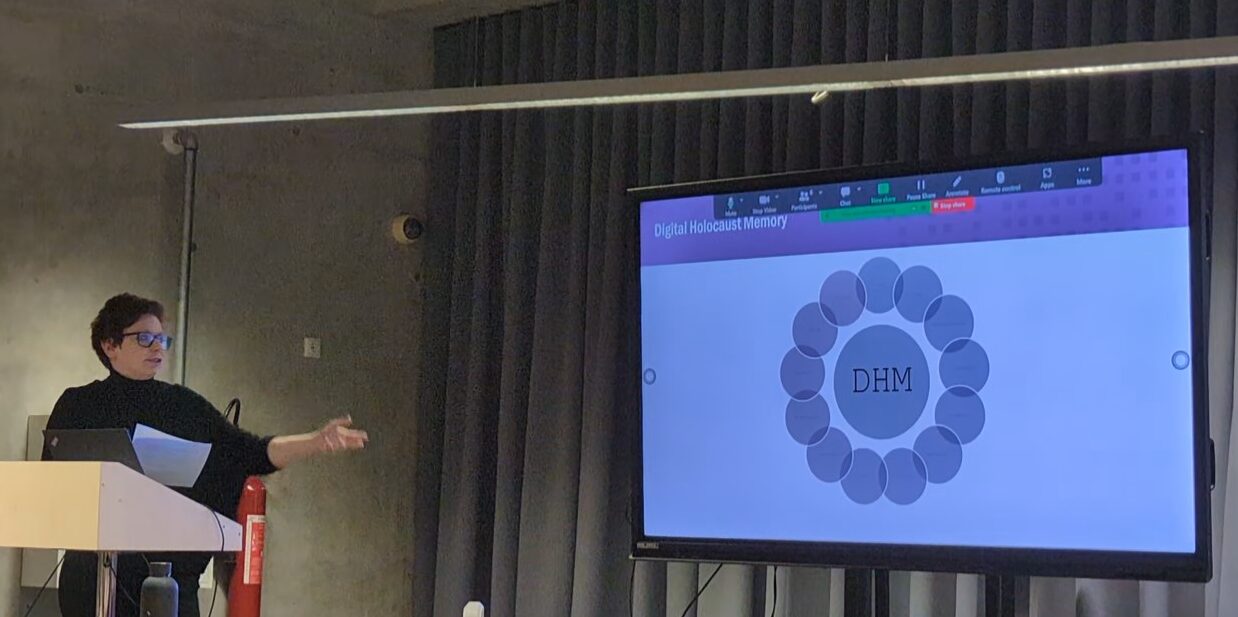
The programme continued with Prof. Victoria Grace Richardson-Walden (University of Sussex) introduction of Landecker Digital Memory Lab’s Digital Memory Database. By highlighting the building blocks and materials of the archive, she emphasized the Database’s conceptual innovation. Through a constant flow of montage creation between user and interface, they envision a ‘living’ database which is sustainable and can be conceived of as a piece of memory work in itself.
In his conceptually oriented talk, Martin Pogačar (Research Centre of the Slovenian Academy of Sciences and Arts) expanded on his theory of “escalating memories.” In the context of modernity’s acceleration, he argued that AI and social media mobilize memories that obliterate mnemonic agency, empower structural forgetting, and prevent coherent collective narrativization. Escalating memories, he concluded, are increasingly self-devouring, potentially resulting in the collapse of storytelling.
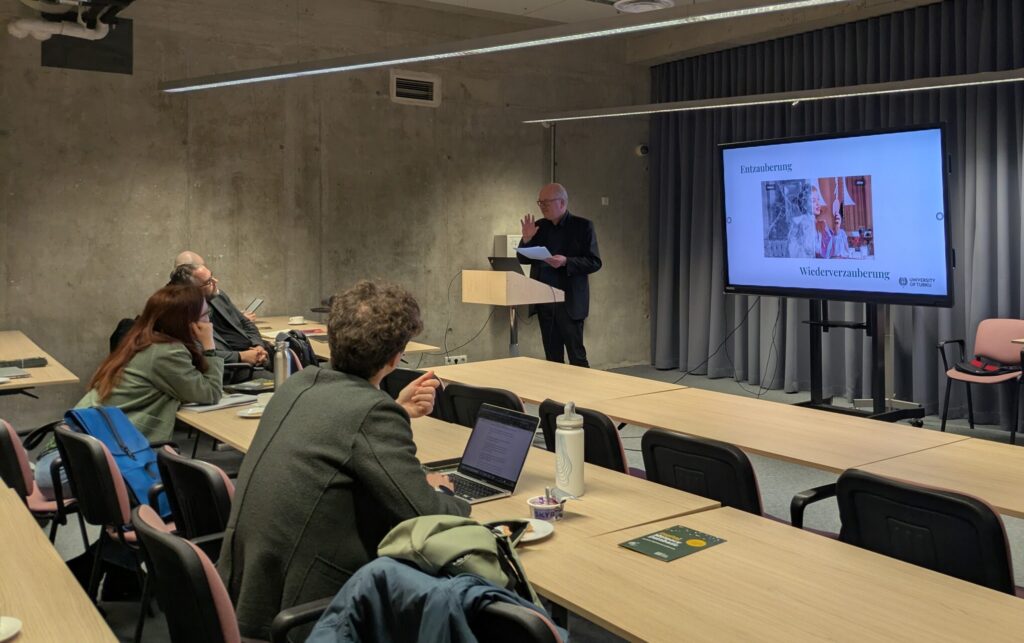
Concluding the day’s programme, Prof. Hannu Salmi (University of Turku) addressed computer vision and AI’s “re-enchantment” of the past. Departing from the potential of the vast visual materials in Finnish archives, he problematised the historical sensitivity of AI models: this sensitivity is often lacking, but to what extent should we invite such techniques, especially in an age where AI can already render the past ‘hyper-real’? By turning to the notion of post-digitality as a tool to think through these complexities, Salmi’s presentation provided food for thought for DIGHT-Net’s future endeavours.
Marjolein Uittenbogaard