News
News
DIGHT-Net Report: Theorising Digital Cultural Heritage: A DIGHT-Net PhD Summer School, 24–26 August 2026
September 2, 2026
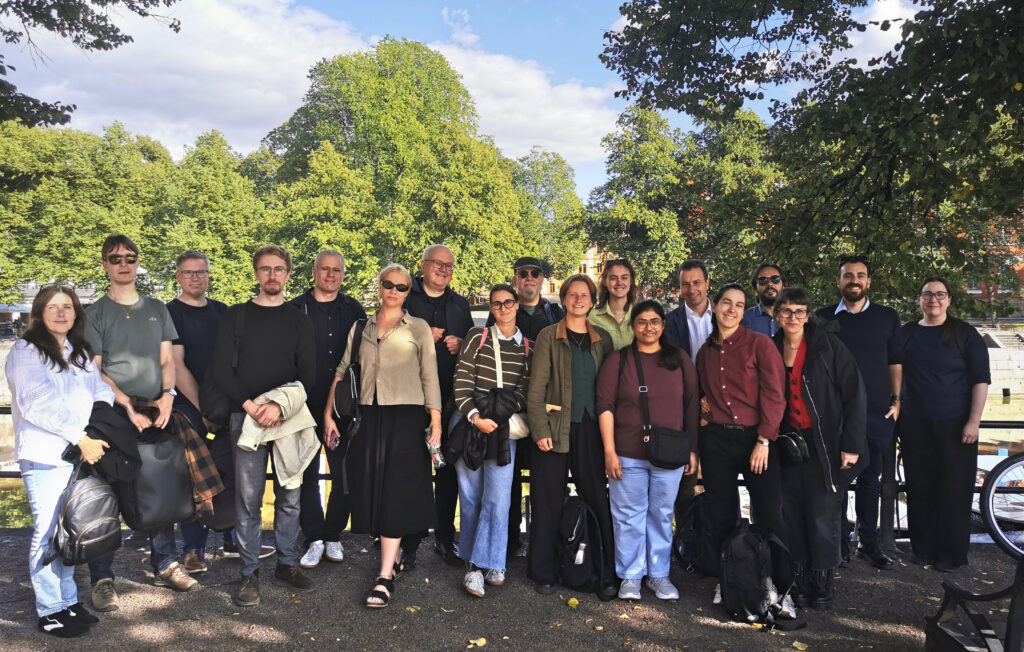
From 24–26 August 2026, the second DIGHT-Net PhD summer school “Theorising Digital Cultural Heritage” took place at the University of Turku. The summer school brought together young scholars and experts from 10 universities and 7 countries across Europe. Over three days, doctoral researchers and international experts convened to investigate the theoretical underpinnings, critical vocabularies, and methodological frameworks driving the field of digital cultural heritage. The programme consisted of expert lectures, interactive workshops, and cultural site visits. Lecturers from DIGHT-Net’s partner universities led the summer school, offering diverse perspectives on digital cultural heritage, from data and archives to historical experience and cultural memory.
On the first day participants were welcomed by Prof. Hannu Salmi, who opened the summer school by introducing the overarching goals of DIGHT-Net project. The first day of the summer school was a site visit, introducing the multidisciplinary profiling area Cultural Heritage in the Digital Age (DigiHeri) at the University of Turku in Finland. Prof. Veronika Laippala presented the TurkuNLP Register Tools, demonstrating how automatic text variety/register identification reduces noise in web-scale corpora and historical newspapers. Next, Adjunct Prof. Lauri Kemppinen explored game-based heritage and history education via a custom Late Iron Age Minecraft environment (Kokemäki River Valley), demonstrating how playing converts heritage into a participatory process. After that Prof. Anne Alvesalo-Kuusi introduced the LAWPOL infrastructure and Lawradar tool, showing how legislative archives mirror evolving societal values. The concluding talk by Adjunct Prof. Kimmo Elo discussed Politiikkapöytä, a research environment that provides digital tools to study digitised plenary debates, and enables long-term research into political language, historical references, and power dynamics. The day ended with a welcome dinner, which was preceded by a guided visit to Aboa Vetus Ars Nova Museum, where participants were able to learn about the history of Turku before and after the great fire of 1827.
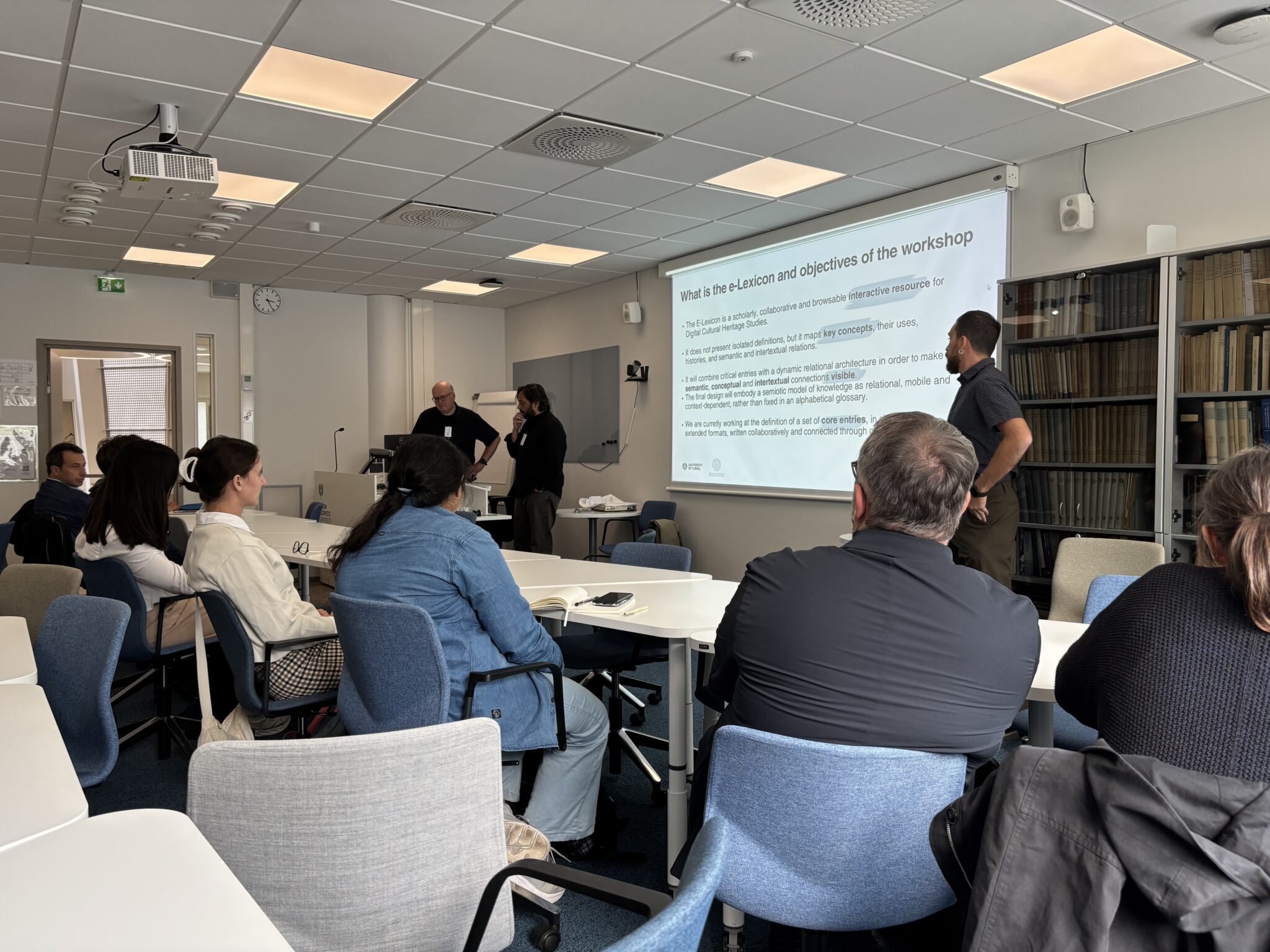
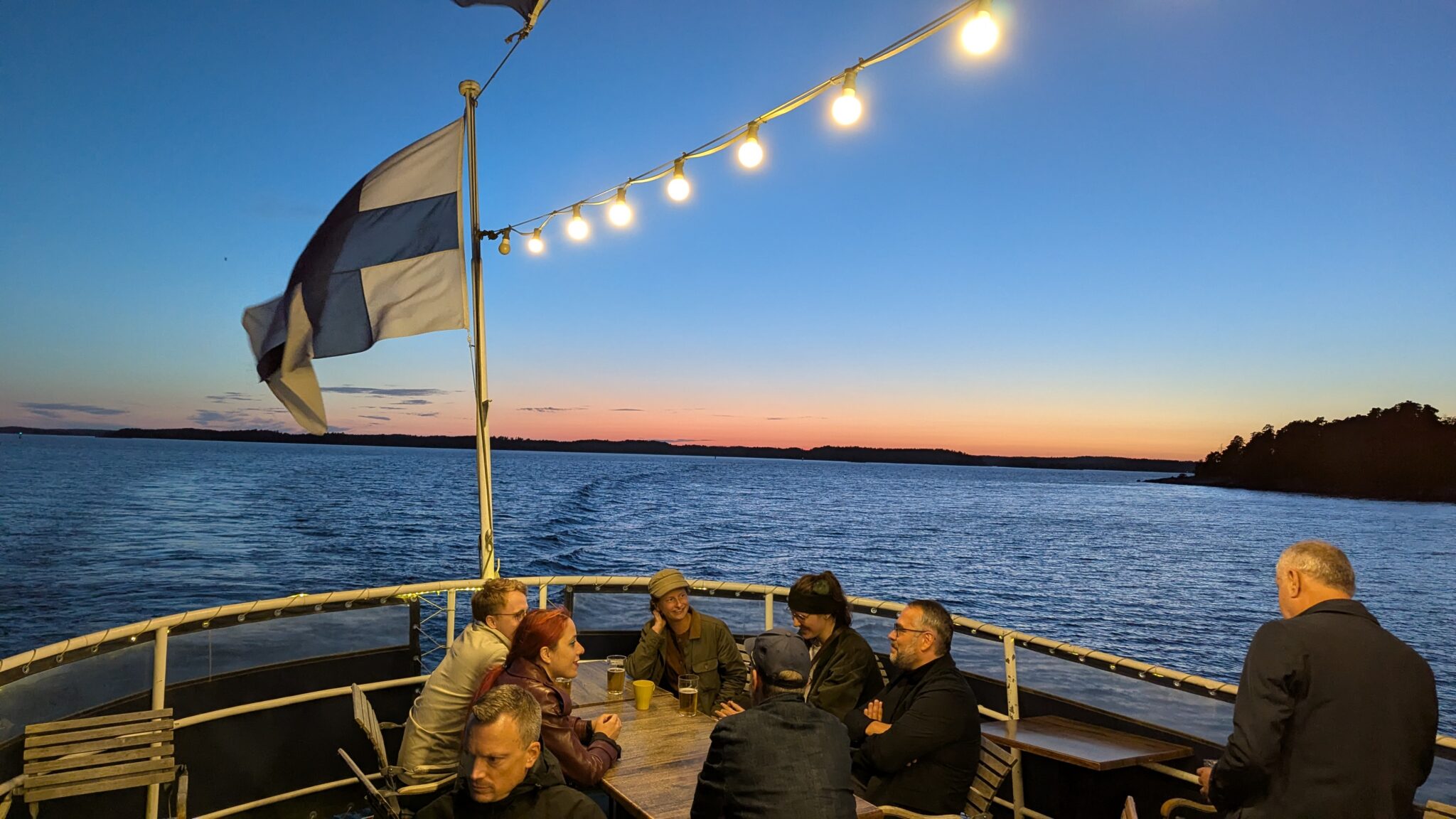
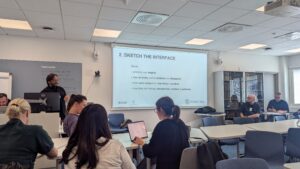 On the second day of the summer school Prof. Anna Maria Lorusso (University of Bologna) analysed how digital archives alter concepts of authenticity, shifting focus toward legitimacy and complex temporalities. This lecture on conceptual shifts in digital archives was followed by a workshop under the theme of “Writing the digital archive”. Associate Prof. Sophie Berrebi (University of Amsterdam) led this combined lecture and practical workshop on reading archives “along the grain” and blending academic rigor with literary narrative techniques. In the afternoon, the head of the DIGHT-Net project, Prof. Marek Tamm (Tallinn University), examined how historical experience is structured by digital technologies and introduced the concept of ‘postdigital historicity.’ The lecture discussed how digital tools, platforms, and algorithms do not merely preserve the past, but actively reframe historical agency, authority, and human relationships with time. Thereafter, Prof. Jaakko Suominen (University of Turku) delivered a lecture interrogating how video games construct, preserve, and alter cultural memory, explaining especially the goals and content of critical game studies. The programme continued with a collaborative co-design workshop led by Prof. Francesco Mazzucchelli (University of Bologna) and Prof. Hannu Salmi, which focused on building the DIGHT-Net e-Lexicon. The workshop built on group discussions of “core concepts” of digital cultural heritage, such as born-digital, immersion and openness, to be explored in the e-lexicon. It also provided space to brainstorm ideas for the interface of such an online resource. In the evening the participants were able take part in a dinner cruise aboard the M/S Rudolfina from Turku to near-by old town of Naantali. On a mild late-summer evening, we got to enjoy the archipelago near Turku.
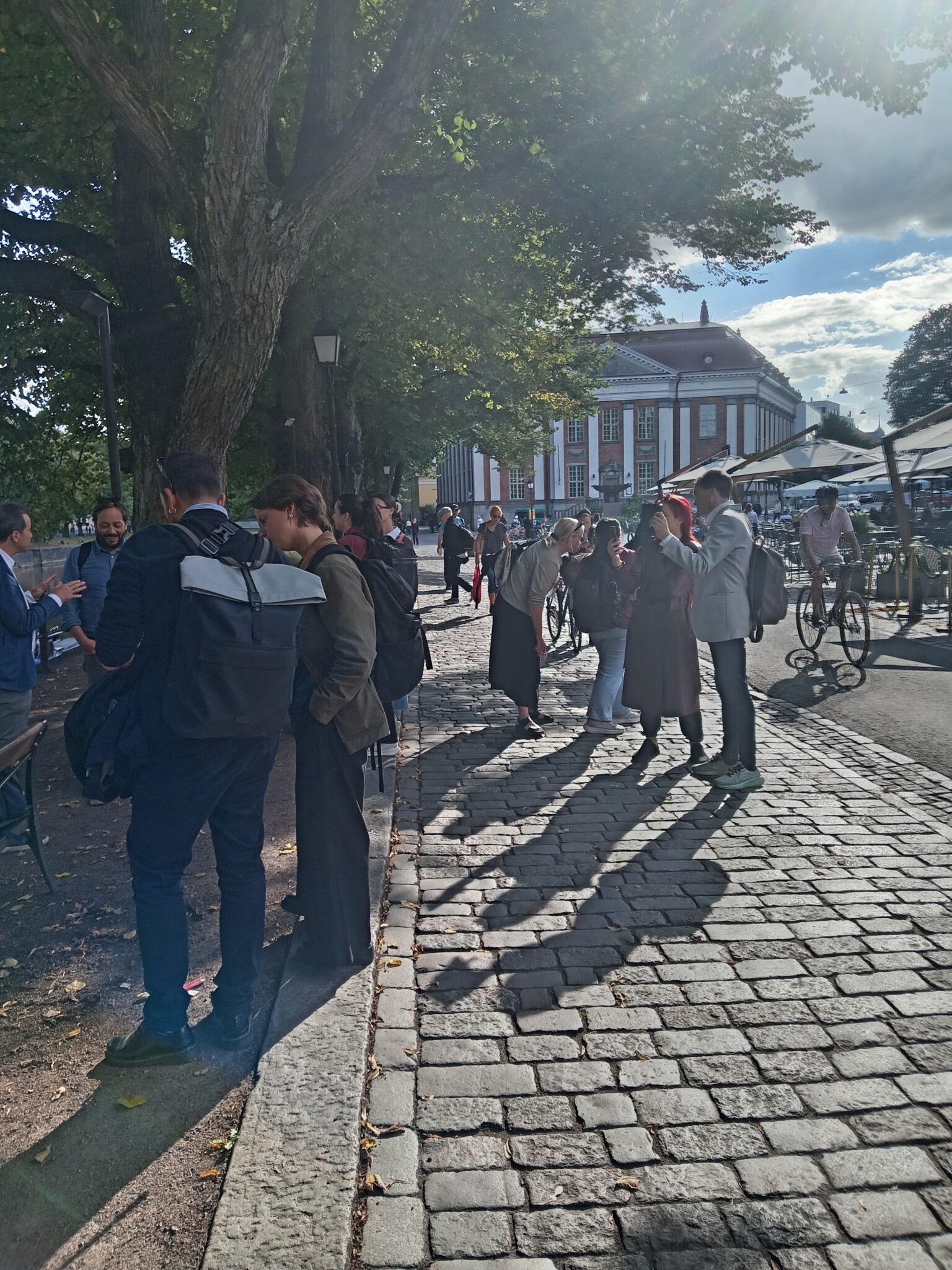
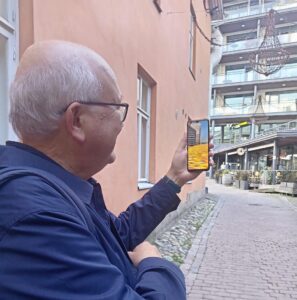 In the opening lecture of the third day of the summer school, Prof. Indrek Ibrus (Tallinn University) explored the integration of “thick data” alongside big data methodologies. After that, Associate Prof. Christian Olesen (Amsterdam University) ran a lecture-workshop on navigating digitized AV archives, contrasting quantitative “distant viewing” techniques with close readings of small databases. Next, Prof. Indrek Ibrus guided participants through practical methods for analysing relational structures within digital datasets. In the closing lecture of the summer school, Prof. Giovanni Maddalena (University of Bologna) framed archives through the pragmatist philosophy of “gestures,” demonstrating that digital archiving is an active expression uniting knowledge and communication. The lecture applied pragmatist philosophy to frame digital archiving not as static storage, but as active communication and knowledge creation. After a concluding group discussion, the participants were able to join a site visit to Chapel of the Holy Ghost, led by Prof. Panu Savolainen (Aalto University), featuring an immersive 3D XR historical model of the Turku Aninkainen district (Omnia Vincit Amor app).
Heidi Hakkarainen and Petri Paju